
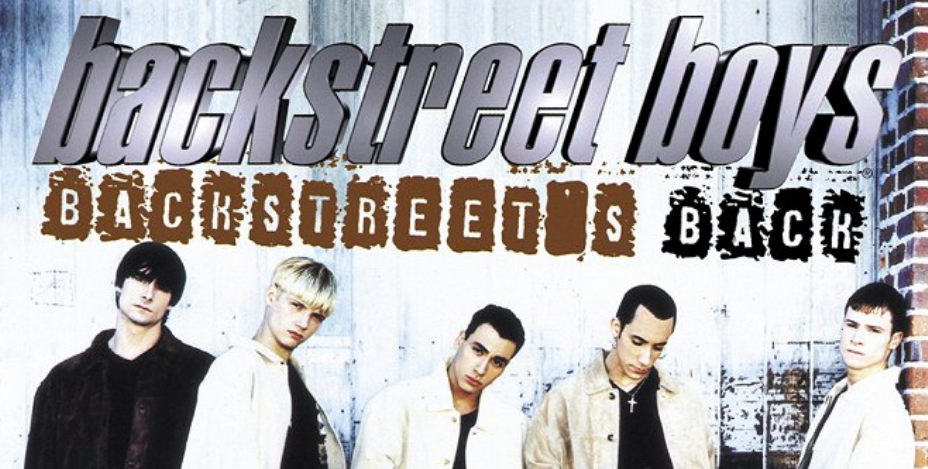
When the Backstreet Boys released Everybody (Backstreet’s Back) in 1997, most viewers saw a playful, Halloween‑themed spectacle: a haunted mansion, a thunderstorm, and five performers transformed into classic monsters. The video became iconic for its choreography and campy horror aesthetic, yet beneath the surface lies something far more compelling. Each transformation — the werewolf, the mummy, the Phantom, the divided self of Jekyll and Hyde, and Dracula — belongs to a deep literary lineage that shaped the modern imagination long before cinema ever reinterpreted these figures.
Popular culture often remembers these monsters through their later screen adaptations, but their origins stretch back into medieval folklore, Gothic fiction, Victorian anxieties, and the early roots of speculative literature. The video borrows the visual language of familiar horror imagery, yet the characters themselves rest on foundations laid by writers such as Bram Stoker, Robert Louis Stevenson, Gaston Leroux, and the anonymous storytellers who first imagined the wolf‑man in the forests of Europe. These literary versions are richer, stranger, and more symbolically charged than their cinematic descendants.
This essay explores those origins. It traces how each Backstreet Boy’s monstrous persona connects to the texts, themes, and cultural fears that first gave these figures life. While acknowledging the influence of later popular imagery where necessary, the focus remains firmly on the stories, metaphors, and psychological undercurrents that began on the page.
Viewed through this lens, the video reveals a surprising truth: “Everybody (Backstreet’s Back)” is not merely a pop‑culture monster mash. It is a playful remix of some of the most enduring narratives in Western literature — a celebration of the myths and metaphors that continue to haunt our collective imagination.
What makes this connection even more striking is how naturally the song’s central questions align with the monsters portrayed. Long before these figures appeared on screen, their literary counterparts were already grappling with themes of identity, desire, and recognition. Each monster embodies a different facet of the human need to be seen, understood, or feared — and the song’s structure mirrors those concerns with uncanny precision.
The werewolf has long symbolised the divided self, a test of authenticity and the fear that a hidden nature might erupt into view. The Phantom embodies the longing to be recognised behind a mask. The mummy represents displacement and the anxiety of awakening in a world that no longer resembles one’s own. Jekyll and Hyde personify the conflict between public identity and private impulse. And Dracula, shaped by both literary imagination and historical echoes, stands at the crossroads of allure, dominance, and the dangerous pull of desire.
Together, these figures form a chorus of literary archetypes shaped by centuries of storytelling. Their presence in the video transforms the song’s emotional core into something deeper: a reflection of how these monsters have always been understood — not merely as symbols of fear, but as mirrors of the human desire to be acknowledged, desired, or accepted.
Brian Littrell — The Werewolf: Literature’s Oldest Struggle Against Identity
The first transformation in the music video belongs to Brian, and that choice carries a weight that becomes clearer when viewed through a literary lens. In the long history of folklore and Gothic storytelling, the werewolf has always been the figure that forces audiences to confront the instability of identity. Medieval writers used the wolf‑form to explore the fear that a hidden nature might surface without warning, revealing a self that society demands remain unseen. In tales such as Bisclavret, the shift into wolf‑shape is not a descent into savagery but an exposure — a revelation of something truer, older, or more conflicted than the human face allows.
As the centuries progressed, Gothic and Victorian authors deepened this symbolism. The werewolf became a metaphor for the divided self: a being caught between restraint and impulse, belonging and isolation, the desire to be understood and the fear of being exposed. The transformation was never just physical. It was psychological, moral, and existential — a struggle between the self one presents to the world and the self that refuses to stay buried.
Brian’s portrayal draws directly from this tradition. His shift into wolf‑form is abrupt and involuntary, framed by a storm‑lit mansion that heightens the sense of internal conflict. The moment he changes, the atmosphere of the video tilts. The familiar becomes uncanny, and the narrative steps into the realm of the Gothic. His transformation embodies the literary werewolf’s central question: whether the self that emerges in the dark is the truer one, and whether the world will accept what has been revealed. And then comes the sound that truly begins the story.
Before the main refrain erupts, a single howl cuts through the mansion’s corridors. In folklore and Gothic literature, a howl is never merely a noise. It is a summons, a threshold, the moment when the night asserts its power and the hidden nature breaks free. It signals that the ordinary world has been left behind and that the uncanny has taken hold. In the video, that howl becomes the catalyst. It is Brian’s transformation made audible — the release of a self that can no longer be contained — and it sets every other metamorphosis into motion. The mansion stirs, the narrative awakens, and the rest of the group begins to follow the path the werewolf has opened.
By beginning with Brian’s transformation and that echoing howl, the video anchors itself in the oldest and most psychologically charged monster of the entire lineup. The werewolf’s literary roots revolve around authenticity, uniqueness, desire, and the fear of being misunderstood — the very themes that shape the emotional core of the song. Without ever referencing the lyrics directly, the video mirrors the centuries‑old tradition of the wolf‑form as a symbol of the struggle to define oneself in a world that may not be ready for what emerges.
AJ McLean — The Opera Phantom: Literature’s Masked Voice of Longing, Reimagined With Confidence
AJ’s transformation into the masked figure haunting the mansion draws from one of Gothic literature’s most enduring icons: the Phantom of the Opera. In Gaston Leroux’s 1909 novel, the Phantom is defined by longing, secrecy, and the pain of being unseen. His mask is not a theatrical flourish but a shield — a way to hide a face that has brought him only rejection. His power lies in his voice, yet his life is shaped by isolation. He is a presence who haunts the edges of society, yearning for recognition while fearing exposure.
AJ’s interpretation, however, introduces a striking contrast. While the literary Phantom moves through the world with a mixture of brilliance and vulnerability, this version carries himself with a confidence that Leroux’s character rarely possessed. Instead of shrinking into the shadows, AJ’s Phantom steps forward. Instead of hiding from others, he dances with women in the mansion’s grand hall. This shift does not erase the literary roots — it reframes them. The mask remains a symbol of concealment, but here it becomes part of a persona that commands attention rather than avoids it.
This confidence adds a new dimension to the Phantom’s traditional themes. In literature, he longs to be acknowledged for who he is beneath the mask; in this interpretation, he seems to have already claimed that acknowledgment. The dance sequences suggest a figure who is no longer defined solely by rejection but by presence — someone who moves through the world with a sense of belonging that the original Phantom never achieved. It is a transformation from yearning to self‑assurance, from hidden genius to visible charisma.
Yet the core literary themes remain intact. The Phantom has always embodied the tension between the self that is shown and the self that is concealed. Even in this more confident portrayal, the mask still carries meaning. It represents the boundary between vulnerability and performance, between the desire to be understood and the fear of revealing too much. AJ’s Phantom channels this duality through movement rather than solitude, through engagement rather than withdrawal.
By presenting a Phantom who is both masked and assured, the video offers a reinterpretation that honours the character’s literary origins while reshaping his emotional landscape. This version becomes a figure who steps into the spotlight rather than hiding behind the curtain — a Gothic icon reimagined with a boldness that reflects the song’s themes of identity, desire, and recognition.
Nick Carter — The Mummy: Literature’s Resurrection of the Past
Nick’s transformation into a mummy draws from a literary tradition that long predates the familiar bandaged figure of later popular culture. In the 19th century, during the height of Egyptomania, writers used revived figures from ancient Egypt to explore themes of displacement, cultural misunderstanding, and the unsettling persistence of history. These stories were not about shambling corpses but about the past rising into the present, challenging the living to confront what they believed they had left behind.
One of the earliest and most imaginative works in this tradition is Jane C. Loudon’s The Mummy! (1827), a novel that envisioned a resurrected Egyptian monarch navigating a future society. Loudon’s mummy was articulate, intelligent, and morally complex — a being whose return forced the living to reconsider their assumptions about civilisation and progress. This portrayal established the mummy not as a mindless horror but as a symbol of the past asserting its relevance.
Later in the century, Bram Stoker — best known for Dracula — the epitome of vampire literature, contributed significantly to the mummy genre with The Jewel of Seven Stars (1903). While Stoker’s name is synonymous with the vampire, this novel reveals his fascination with resurrection, ancient power, and the dangers of disturbing what should remain untouched. In The Jewel of Seven Stars, the revived Egyptian queen is not a simple threat but a force that disrupts the boundaries between eras, cultures, and identities. Stoker’s involvement in both the vampire and mummy traditions underscores how deeply Victorian literature was shaped by anxieties about the past returning with a voice of its own.
Nick’s portrayal echoes this lineage. His mummy is not merely a relic wrapped in linen; he is a presence awakened in a world that does not belong to him. The mansion becomes a symbolic excavation site — a place where the past rises into the present, unsettling the order of things. His movements and posture suggest someone caught between eras, someone whose identity has been shaped by a history that refuses to stay buried.
This sense of displacement aligns closely with the emotional undercurrents of the song. Without referencing the lyrics directly, the portrayal reflects the mummy’s literary struggle: the desire to be recognised in a world that has forgotten the context of one’s existence, the hope of being understood despite the gulf of time, and the fear of being reduced to a curiosity rather than acknowledged as a presence with depth and meaning. Victorian mummy literature often used resurrection to explore questions of uniqueness, relevance, and belonging — themes that resonate strongly with the emotional tone of the music.
Nick’s mummy embodies the tension between memory and modernity. He represents the past stepping into the present, the ancient confronting the contemporary, and the enduring human need to be seen even when one’s origins lie far outside the world of those doing the looking. By drawing from the literary tradition rather than relying on later cinematic interpretations, this portrayal restores the mummy to its original symbolic power: a reminder that history is never silent, and that the stories buried beneath time can rise again with a voice that demands to be heard.
Kevin Richardson — Dr. Jekyll and Mr. Hyde: Literature’s Most Enduring Division of the Self
Kevin’s transformation into the dual figure of Dr. Jekyll and Mr. Hyde draws from one of the most psychologically rich works of 19th‑century literature. Robert Louis Stevenson’s Strange Case of Dr Jekyll and Mr Hyde (1886) is not a tale of magic or curses but a study of the human mind — a story about the parts of oneself that must remain hidden, the impulses that society demands be suppressed, and the consequences of dividing the self into acceptable and unacceptable halves.
In Stevenson’s novella, Jekyll is a respected figure who believes he can separate the darker aspects of his nature from the persona he presents to the world. Hyde becomes the embodiment of everything Jekyll wishes to deny: desire without restraint, action without conscience, instinct without the burden of reputation. The horror of the story lies not in Hyde’s violence but in the realisation that Jekyll created him willingly. The division is not imposed from outside; it is born from within.
Kevin’s portrayal captures this literary tension with striking clarity. His transformation is not a sudden eruption like the werewolf’s, nor a masked concealment like the Phantom’s. Instead, it is a shift between two selves that coexist uneasily within the same body. His posture, expression, and movement reflect the struggle between composure and volatility, between the self that seeks approval and the self that refuses to be contained. The mansion setting amplifies this duality: a refined environment disrupted by the emergence of a presence that does not belong within its polished walls.
This portrayal aligns closely with the emotional undercurrents of the song. Without referencing the lyrics directly, the duality of Jekyll and Hyde mirrors the questions of authenticity, desire, and recognition that shape the music. Jekyll longs to be seen as respectable, admirable, and controlled; Hyde embodies the fear that the hidden self might be the truer one. The tension between these identities reflects the universal struggle to reconcile the parts of oneself that are shown to the world with the parts that remain unspoken.
In literature, the tragedy of Jekyll and Hyde lies in the impossibility of separation. Jekyll believes he can divide his nature cleanly, but the experiment reveals that the self is not a set of compartments — it is a single, intertwined whole. Kevin’s portrayal honours this insight. His transformation is not a simple switch between two personas; it is a visualisation of the internal conflict that defines the character. The performance suggests a man who cannot fully escape either side of himself, no matter how desperately he tries.
By representing Jekyll and Hyde, Kevin brings to the video one of literature’s most enduring metaphors for the divided self. His portrayal adds psychological depth to the ensemble of monsters, reminding the audience that the most unsettling transformations are not those imposed by curses or ancient rituals, but those that arise from within — from the parts of the self that refuse to remain hidden.
Howie Dorough — Dracula: Literature’s Aristocrat of Desire, Lineage, and the Night
Howie’s transformation into Dracula draws from one of the most influential figures in Gothic literature. Bram Stoker’s Dracula (1897) introduced a character whose power lies not only in supernatural abilities but in charisma, aristocratic bearing, and the unnerving blend of seduction and threat. Stoker’s Count is a being who moves with deliberate grace, commands attention effortlessly, and exerts influence through presence rather than force. His danger is psychological as much as physical — a master of allure, persuasion, and quiet domination.
Stoker’s creation did not emerge from imagination alone. Scholars have long noted that the Count’s physical description and noble lineage bear striking similarities to Vlad Țepeș, a 15th‑century Wallachian prince known for his ruthlessness and iron rule. Vlad’s reputation for impalement, his fierce defence of his territory, and his imposing appearance all echo through Stoker’s depiction of a tall, commanding, dark‑clad nobleman with a piercing gaze. Even though Howie’s portrayal omits the facial hair Stoker gave his Count, the aristocratic posture and controlled intensity remain unmistakably aligned with the historical inspiration.
Another figure often linked to Stoker’s conception is Countess Elizabeth Báthory, the Hungarian noblewoman infamous for her alleged crimes against young women. While Stoker never confirmed her as a direct source, the thematic parallels are undeniable: a member of the aristocracy preying upon women, a legacy steeped in blood, and a reputation that blurs the line between history and legend. These echoes deepen the literary Dracula’s association with predation, seduction, and the targeting of women — themes that appear vividly in the music video.
The mansion’s butler provides a refined parallel to Renfield, one of the most memorable figures in Stoker’s novel. Unlike Renfield, who is unhinged and erratic, the butler in the video remains composed, dignified, and controlled. His deference suggests not madness but recognition — an instinctive awareness of the Count’s authority. He behaves like someone who feels the gravitational pull of a powerful presence and responds with quiet obedience, reflecting the subtler forms of influence that Stoker’s Dracula exerts on those around him.
The video also introduces a woman who evokes the literary lineage of Lucy Westenra or Mina Murray‑Harker, the two women at the emotional core of Stoker’s novel. Dracula’s interactions with women in the book are charged with a blend of fascination, seduction, and danger. He is drawn to them not merely as victims but as figures he wishes to transform, possess, or claim. In the video, Howie’s Dracula leans toward a woman with a near‑bite intimacy that mirrors the novel’s most iconic moments. The tension is unmistakable: the scene hovers between allure and predation, reflecting the literary Count’s preference for targeting women whose openness, curiosity, or vulnerability makes them susceptible to his influence.
Surrounding him are three women who evoke Dracula’s brides — the trio who appear in Stoker’s novel as representatives of desire, danger, and the uncanny. These figures are not mere companions; they represent the Count’s ability to create pledges that blur the line between devotion and enthrallment. Their presence reinforces the literary theme of Dracula as a figure who surrounds himself with those he has transformed or captivated, those who exist in a liminal state between autonomy and surrender.
Even without on‑screen shapeshifting, the video includes one of Dracula’s most iconic literary associations: the bat. In Stoker’s novel, the bat is one of the Count’s primary forms, a symbol of his ability to move unseen, infiltrate spaces, and exist between worlds. When Howie opens his coat and bats burst forth, the moment becomes a direct nod to this aspect of the character. It is not a cinematic cliché but a literary reference — a reminder that Dracula’s power is tied to animals of the night, beings that observe silently and strike without warning.
Howie’s portrayal captures the aristocratic confidence that defines Stoker’s Count. His movements are controlled, his presence commanding, his allure unmistakable. He does not need exaggerated menace or overt aggression; his power lies in the way he occupies space, the way others react to him, and the way the narrative bends around his presence. This interpretation honours the literary Dracula: a figure who is both host and predator, charming and dangerous, refined yet driven by a hunger that shapes every interaction.
By drawing from Stoker’s original novel — its composed Renfield‑like devotion, its Lucy‑ and Mina‑like fascination, its brides, its bat symbolism, and its historical inspirations in Vlad Țepeș and Elizabeth Báthory — Howie’s portrayal becomes one of the most faithful literary interpretations in the entire video. He brings to the ensemble a character whose legacy is built on the interplay between charm and peril, longing and control, presence and mystery. Dracula remains impossible to ignore, and in this portrayal, he is exactly as Stoker intended: a figure who captivates even as he threatens, who commands even as he seduces, and who leaves a lingering shadow long after he has vanished from sight.
Epilogue
Taken together, the five transformations in the music video form more than a parade of iconic figures. They create a tapestry woven from centuries of literary tradition, each monster carrying the emotional and symbolic weight of the stories that shaped them. The werewolf, the Phantom, the mummy, Jekyll and Hyde, and Dracula are not random choices; they are archetypes refined through folklore, Gothic fiction, Victorian anxieties, and the psychological landscapes of the 19th century. Each one embodies a different facet of the human desire to be recognised, understood, desired, or feared.
Brian’s werewolf draws from medieval and Gothic literature’s oldest metaphor for the divided self — the fear that one’s hidden nature may erupt into view. AJ’s Phantom channels the ache of longing and invisibility, the voice that seeks acknowledgment behind a mask. Nick’s mummy resurrects the Victorian fascination with the past intruding upon the present, a figure caught between eras and struggling to belong. Kevin’s Jekyll and Hyde embody the psychological conflict between the self that conforms and the self that rebels, a division born from within rather than imposed from without. And Howie’s Dracula stands as the aristocrat of Gothic fiction — a figure of allure, dominance, lineage, and shadowed desire, shaped by both literary imagination and historical echoes.
What unites these portrayals is how naturally they align with the emotional core of the song. Without ever referencing the lyrics directly, the monsters reflect the questions that drive the music: questions of authenticity, uniqueness, desire, and recognition. Each figure becomes a metaphor for a different aspect of the human condition — the parts of ourselves we reveal, the parts we conceal, the parts we fear, and the parts we hope someone will finally see.
The mansion setting becomes a stage where these literary archetypes converge, each transformation awakening another, each presence amplifying the next. The howl that begins the story, the masked voice that follows, the resurrected past, the divided self, and the aristocrat of the night all contribute to a narrative that is richer than its surface suggests. The video becomes a celebration of Gothic storytelling, a homage to the monsters that have shaped our understanding of fear, desire, and identity for generations.
In the end, the monsters are not simply costumes. They are reflections — mirrors held up to the audience, to the performers, and to the long literary history that gave them life. They remind us that the figures we call monsters have always been ways of exploring what it means to be human. And in this video, they return not as horrors, but as symbols of the timeless questions that continue to define us.