
The Loch Ness Monster, one of the most discussed mysteries among animals unknown to science, remains unsolved. Over the years, numerous candidates have been proposed to explain what such an animal could be within a biological framework. The most familiar suggestions point either to a prehistoric reptile from the time of the dinosaurs known as the Plesiosaur or to an Ice Age Whale called the Zeuglodon. These ideas attempt to place the Loch Ness mystery within a zoological context, even though no evidence supports the presence of such animals in the loch.
A reference to extinction also leads to a real species whose status remains uncertain. The South Chinese Tiger, once native to the Fujian, Guangdong, Hunan, and Jiangxi provinces, is now thought to be extinct in natural habitats. Most surviving members are found only in captivity, although there are plans to reintroduce a few into the wild.
While numerous sightings of a strange animal in Loch Ness have been reported over the decades, no comparable claims existed for the South Chinese Tiger until the late 2000s, when a farmer presented photographs said to show the tiger in natural surroundings. The images generated hope that the subspecies had survived in the wild once again. Subsequent examination, however, demonstrated that the photographs were fabricated.
A similar story from the 1930s places the Loch Ness mystery within the same category of photographic hoaxes, linking both cases through the use of constructed images that shaped public belief,
THE LOCH NESS PHOTOGRAPHIC HOAX OF THE 1930s
The earliest written reference to an unusual aquatic presence in the Ness region appears in the Life of Saint Columba, composed in the 7th Century by Adomnán, Irish abbot of Iona. The narrative describes an incident set in 565 AD, during Columba’s travels through northern Scotland. According to the text, Columba and his companions reached the River Ness and encountered local residents preparing to bury a man who had died after entering the water. The description states that a large aquatic presence had seized the man, leading to his death.
Columba instructed one of his followers to swim across the river. As the follower entered the water, a large snake-like animal emerged, heading for the man. Columba then raised his hand and invoked the name of God, commanding the presence to retreat.
The modern Loch Ness narrative however, began in the early 1930s, when newspapers in northern Scotland started to publish accounts describing a large aquatic presence within the loch. These reports appeared during a period when regional news often highlighted unusual events to attract readers, and the Loch Ness stories quickly gained attention. The descriptions varied, yet they shared a common theme: something sizeable had been seen rising or disturbing the surface of the water. As more accounts appeared, national newspapers began to cover the story, giving it a wider audience and transforming a local curiosity into an international subject.
The growing interest encouraged further reports, and the loch became a focal point for visitors hoping to witness something unusual. Journalists, photographers, and travellers arrived in increasing numbers, each adding to the sense that a mystery was unfolding. The story gained momentum because it combined an isolated Highland setting with the possibility of a large aquatic presence, creating a narrative that appealed to readers far beyond Scotland.
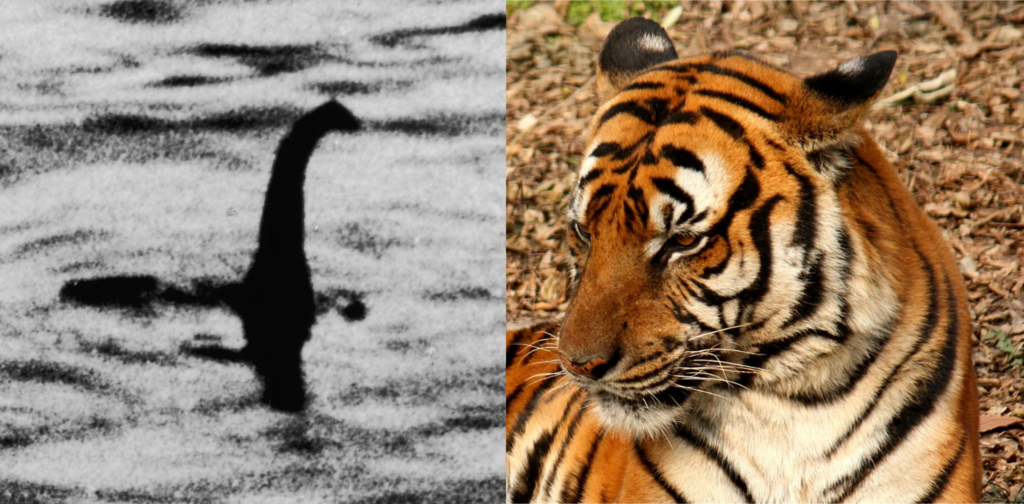
In 1934, a single photograph intensified the phenomenon. The image, later known as the “Surgeon’s Photograph,” appeared to show a dark shape rising from the water with a slender neck held upright. It was published under the name of Robert Kenneth Wilson, a London surgeon. Wilson did not want his name directly associated with the picture and asked that it be presented without attribution to him, which led newspapers to refer to it simply as a photograph supplied by a surgeon. This indirect association gave the image an air of professional credibility without tying Wilson personally to its interpretation.
The photograph quickly became the most recognisable representation linked to Loch Ness. Its clarity and simplicity made it striking, and it served as visual confirmation for many readers who had followed the earlier reports. For decades, it appeared in books, newspapers, and documentaries as the defining image of the mystery.
Sixty years later, in 1994 the photograph was exposed as a staged construction. The revelation demonstrated how a single image, presented at the right moment and supported by the perceived authority of a medical professional, could influence public perception and sustain a narrative that had already gained international attention. The hoax did not diminish interest in Loch Ness, but it revealed how easily a photograph could become central to a story built on limited evidence and widespread fascination.
THE SOUTH CHINESE TIGER — DECLINE, EXTINCTION IN NATURAL HABITATS, AND THE 2007–2008 HOAX
The South Chinese Tiger once lived throughout the Fujian, Guangdong, Hunan, and Jiangxi provinces. Historical accounts confirm a widespread Tiger presence in forested hills, river valleys, and agricultural margins. During the mid‑20th Century, the decline of the South Chinese Tiger accelerated sharply. Mao Zhadong declared the tiger an agricultural obstacle, and eradication drives were organised to remove large predators from rural landscapes. These drives, combined with expanding farmland and reduced prey availability, caused a rapid collapse in the tiger’s numbers. By the late 1970s, sightings had become rare, and the subspecies was already approaching disappearance in natural habitats.
During the 1990s, several surveys were conducted to determine whether any South Chinese Tigers still persisted outside captivity. These surveys examined prey density, habitat condition, and landscape connectivity across former range provinces. The results indicated that survival in natural habitats was highly unlikely. Prey species such as wild boar and small deer had declined sharply, leaving insufficient food resources for a large predator. Forests had become fragmented by roads, settlements, and agricultural expansion, reducing the continuous cover required for hunting and movement. Habitat degradation, combined with human disturbance and broader environmental pressures, created conditions that could not support a remaining population. By the end of the decade, the subspecies was considered functionally extinct in the wild.
In 2007, a farmer named Zhou Zhenglong presented photographs said to show a South Chinese Tiger in natural surroundings. The images were released during a period when conservationists were searching for any sign that the subspecies might still persist outside captivity. The possibility of survival carried enormous significance, and the photographs attracted immediate attention. Regional authorities displayed the images publicly, and the story spread quickly through national media. For many people, the photographs represented hope that a lineage thought to be lost in natural habitats might still endure.
As the images circulated, questions began to emerge. The tiger’s posture, outline, and lighting appeared unusually consistent across multiple photographs. Researchers at Nanyang University examined the images using computer analysis and compared the tiger’s form with commercially available tiger pictures. The match was precise enough to demonstrate that the tiger had been inserted into the scene. The analysis showed that background and foreground elements did not align naturally with the tiger’s outline, revealing the photographs as fabricated.
The case became one of the most widely discussed zoological hoaxes of the early 21st Century. It highlighted how a single set of images, presented at a moment of conservation urgency, could influence public belief and create the appearance of survival where none existed. The revelation did not diminish the importance of conservation efforts for the South Chinese Tiger, but it demonstrated how easily a constructed image could shape expectations surrounding a subspecies already facing severe decline.
It would be understandable to view these two cases as difficult to compare, especially since one concerns a mystery that has never been explained and the other concerns a real animal with a well‑documented biological history. The Loch Ness story developed around reports that could not be verified, while the South Chinese Tiger represents a subspecies with a clear zoological record and a documented decline in natural habitats. Despite this difference, the pattern of the hoaxes and the circumstances that allowed each one to emerge show striking similarities.
Both cases involve photographs presented at moments when public interest was already heightened. Both gained attention because the images appeared to offer confirmation of something long hoped for: in one case, a large aquatic presence in a Highland loch, and in the other, the survival of a tiger thought to be lost in natural surroundings. Each photograph shaped public belief before later examination revealed that the image had been constructed.
The following sections provide the background to each hoax, showing how these two very different stories developed and how the photographs became central to their respective narratives.
THE LOCH NESS PHOTOGRAPHIC HOAX OF THE 1930s — BACKGROUND AND ORIGINS
The 1934 “Surgeon’s Photograph” was the final stage of a coordinated hoax created by Marmaduke Wetherell, a big‑game hunter hired by London’s Daily Mail in late 1933. The newspaper sent Wetherell to Loch Ness to search for evidence of a large aquatic presence, hoping to build on the growing interest surrounding the loch. Within days, Wetherell announced that he had found large, four‑toed footprints along the shore. The Daily Mail published the discovery immediately, presenting the tracks as possible proof of something unusual in the water.
Zoologists from the Natural History Museum examined the tracks and quickly determined that they were artificial. The impressions had been made using a dried hippopotamus foot, a novelty item commonly used as the base of an umbrella stand at the time. The revelation caused considerable embarrassment for the Daily Mail, which publicly dismissed Wetherell’s find. The incident damaged Wetherell’s reputation and left him humiliated.
In response, Wetherell devised a plan to mislead the newspaper. His stepson, Christian Spurling, was a skilled sculptor and agreed to construct a model. Spurling built a small neck and head from wood putty and attached the structure to a toy submarine purchased from Woolworths. Wetherell and his son Ian took the model to Loch Ness, placed it in the water, and photographed it from a distance to create the impression of a larger object rising from the surface.
Wetherell knew that the Daily Mail would not accept evidence directly from him after the earlier incident. To avoid suspicion, he passed the photographic plates to Maurice Chambers, a friend who then provided them to Dr Robert Kenneth Wilson, a London surgeon known for a respectable professional reputation and a fondness for practical jokes. Wilson allowed the photograph to be published but did not want his name directly associated with the image, leading newspapers to refer to it simply as a photograph supplied by a surgeon.
The Daily Mail published the picture on 21 April 1934. The image, showing a dark shape with an upright neck, quickly became the most recognisable representation linked to Loch Ness. For decades, it appeared in books, newspapers, and documentaries as the defining visual symbol of the mystery.
The full details of the hoax remained unknown until 1994, when Christian Spurling gave a deathbed account describing how the model had been built and photographed. His statement confirmed that the “Surgeon’s Photograph” was a staged construction created as part of Wetherell’s attempt to mislead the newspaper that had previously exposed his earlier fraud.
THE SOUTH CHINESE TIGER PHOTOGRAPHIC HOAX OF 2007 — BACKGROUND AND ORIGINS
The 2007 South Chinese Tiger hoax began with a farmer named Zhou Zhenglong, a 53‑year‑old resident of Zhenping County in Shaanxi Province. Zhou’s actions led to one of China’s most widely discussed internet scandals, later referred to as “Tigergate.” The hoax emerged during a period when conservationists were searching for any sign that the South Chinese Tiger may still persist in natural surroundings, and when regional authorities hoped to promote local development through wildlife‑related publicity.
Zhou was motivated by financial reward. Rumours circulated that proof of a surviving South Chinese Tiger in natural habitat could bring a substantial bounty, possibly reaching one million yuan. Local forestry officials also encouraged the idea of a discovery, hoping that confirmation of a tiger’s presence would support funding for a nature reserve and attract tourism. When Zhou presented photographs said to show a tiger in the mountains of Zhenping, the Shaanxi Provincial Forestry Department awarded him 20,000 yuan as an initial reward and publicised the images widely.
To create the photographs, Zhou borrowed a New Year’s commemorative wall poster featuring a tiger from a villager in another town. He cut out the tiger image, placed the cut‑out among trees and bushes in the hills, and used a borrowed digital camera to take sixty‑two photographs of the poster from different angles. To strengthen the appearance of authenticity, Zhou worked with another villager to carve a wooden tiger paw. He used the wooden mold to stamp false tracks into the snow and photographed the impressions as additional evidence.
The hoax began to unravel when internet users and wildlife specialists examined the photographs. Observers noted that the tiger never changed posture or facial expression across dozens of images, and that the lighting on the tiger did not match the surrounding vegetation. The decisive moment came when a netizen recognised the tiger’s pattern from a mass‑produced calendar poster hanging in a home. The match confirmed that the photographs had been staged.
Following widespread public criticism, Chinese authorities opened an investigation. Officials recovered the original poster and the wooden paw mold, confirming the fabrication. Zhou was arrested for fraud and received a suspended two‑and‑a‑half‑year prison sentence. The earlier reward was revoked, and thirteen local government officials were dismissed or disciplined for supporting and promoting the false discovery.
The case became one of the most prominent zoological hoaxes in modern Chinese history. It demonstrated how a single set of constructed images, presented at a moment of conservation urgency and amplified by local authorities, could shape public belief before later examination revealed the deception.
COMPARISON AND CLOSING REFLECTION
Although the Loch Ness hoax and the South Chinese Tiger hoax emerged in different countries, different decades, and under entirely different biological contexts, the two stories share a pattern that is striking. One concerns a mystery that has never been explained, while the other concerns a real tiger with a clear zoological record and a documented decline in natural habitats. Yet both hoaxes developed because photographs appeared at moments when public interest was already heightened, and both gained momentum because the images seemed to offer confirmation of something long hoped for.
In the Loch Ness case, the photograph supplied through Dr Robert Kenneth Wilson arrived during a period when reports from the loch were receiving widespread attention. The image was simple, clear, and easy to interpret, and it became central to a story that had already begun to form. The background to the hoax involved personal embarrassment, a desire for revenge, and a carefully constructed model placed in the water to mislead a newspaper that had previously dismissed earlier evidence.
In the South Chinese Tiger case, the photographs presented by Zhou Zhenglong appeared during a period when conservationists were searching for any sign that the subspecies might still persist in natural surroundings. Local authorities hoped that confirmation of a tiger’s presence would support regional development, and the photographs were accepted quickly. The background to the hoax involved financial motivation, local ambition, and a cut‑out image placed among vegetation to create the appearance of a living tiger in the hills.
Both hoaxes relied on constructed images presented at the right moment. Both were amplified by institutions eager for a discovery. Both shaped public belief before later examination revealed the deception. The coincidence lies not in the subjects themselves — one a long‑standing mystery, the other a real tiger with a documented decline — but in the way each photograph became central to a narrative that had already gathered momentum.
While the mystery of Loch Ness remains unsolved, investigations continue to explore the depths of the loch through sonar surveys, underwater imaging, and environmental sampling in the hope that one day there may be a clear answer to what lives in those waters. If a large aquatic animal does exist, the animal would be able to enjoy the calm expanse of a Highland habitat that has remained unchanged for generations since its formation. On the other hand, although many consider survival of a wild South Chinese Tiger unlikely, conservation programmes continue to work toward reintroducing this big cat to suitable landscapes so that a top predator in wild China may one day reclaim hunting grounds and hold a place in the natural world once again. These two stories do not take anything away from one another; they simply show how different circumstances can produce coincidences that shape public belief in unexpected ways.